
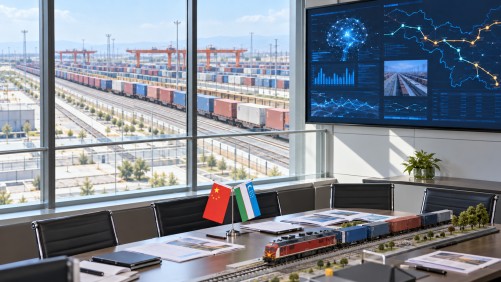
China and Uzbekistan have agreed to enhance their cooperation in several key sectors, including infrastructure, artificial intelligence, and trade, following Chinese Premier Li Qiang’s official visit to Uzbekistan. During this two-day trip to Tashkent, Li held discussions with Uzbek President Shavkat Mirziyoyev and Prime Minister Abdulla Aripov, leading to the signing of multiple cooperation agreements across various fields such as trade, education, healthcare, and climate.
A significant focus of the discussions was the advancement of the China-Kyrgyzstan-Uzbekistan railway project, which both countries aim to progress to improve regional connectivity and bolster economic development. Furthermore, China is encouraging more of its companies to invest in Uzbekistan, with Uzbek officials promising to create a favorable business environment for such investments.
In addition to infrastructure, both nations are set to deepen their collaboration in energy, mineral resources, modern agriculture, digital technology, and environmental protection. China has also shown interest in importing more high-quality Uzbek products, while Uzbekistan is encouraged to increase its access to the Chinese market.
China remains Uzbekistan’s largest trading partner, with bilateral trade between the two countries reaching $16.1 billion last year, marking a 17.9 percent increase from the previous year. The leaders of both countries have reaffirmed their commitment to strengthening political trust and expanding investment, alongside promoting cultural, educational, and tourism exchanges.
Both countries also pledged to enhance their coordination on regional and international issues, further developing their strategic partnership. This move comes as part of their broader efforts to foster a stable and cooperative regional environment.