
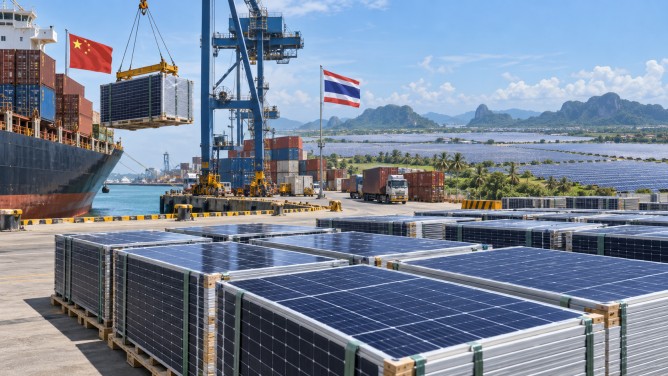
Thailand’s solar panel imports have surged by 88.7% year-on-year, reaching $426.7 million in the first seven months of 2026, according to data from the Ministry of Commerce and Customs Department. China played a dominant role, supplying 99.3% of these imports, valued at $423.9 million, marking a 107.1% increase from the previous year.
Singapore and Hong Kong trailed significantly behind, each accounting for merely 0.3% of Thailand’s total solar panel import value. This spike in imports aligns with Thailand’s upcoming household solar installation program, which is set to offer subsidies of approximately THB50,000 per household. The initiative aims to target one million households initially, with the potential to expand to 1.5 million.
In a bid to bolster the domestic solar manufacturing sector, the Thai government is collaborating with the Ministry of Labour to enhance workforce skills in solar panel assembly, installation, and maintenance. Furthermore, discussions with the Board of Investment are underway to consider reducing duties on production inputs not available within the country, aiming to strengthen the local industry.
Thailand’s strategic push towards solar energy is expected to promote both rooftop and ground-mounted installations, with the dual goals of lowering household electricity expenses and fostering a sustainable clean-energy supply chain domestically.