
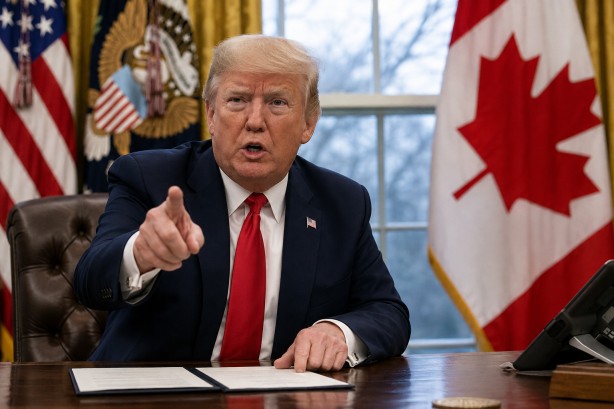
The trade relationship between the United States and Canada has taken a significant hit as US President Donald Trump has strongly condemned Canada following the collapse of trade talks. This development has intensified the ongoing trade conflict between the two nations.
The US has implemented a 50% tariff on approximately $20 billion worth of Canadian imports, impacting various products. In retaliation, Canadian Prime Minister Mark Carney has vowed to impose equivalent tariffs, asserting that Canada will not acquiesce to the conditions set forth by Washington. Carney has labeled the situation a trade war and accused the US of launching an economic assault on Canada.
US Trade Representative Jamieson Greer justified the tariffs, emphasizing their necessity in safeguarding American workers and supply chains. The escalating trade tensions have stirred concerns among businesses and lawmakers on both sides of the border. Canadian business organizations have cautioned that exporters and small enterprises could suffer notable financial setbacks. Meanwhile, US legislators from states adjacent to Canada have raised alarms that the tariffs might lead to higher costs for businesses, farmers, and consumers.
Canada’s proposed retaliatory tariffs are slated to begin on September 8 and will target products such as steel, dairy, appliances, and electronics. This tit-for-tat tariff strategy further deepens the trade rift between the two countries.
The intensifying trade dispute has also cast doubt on the future of the US-Mexico-Canada trade agreement, which plays a vital role in managing a substantial portion of North American trade. The uncertainty surrounding this agreement could have far-reaching implications for economic relations across the continent.