
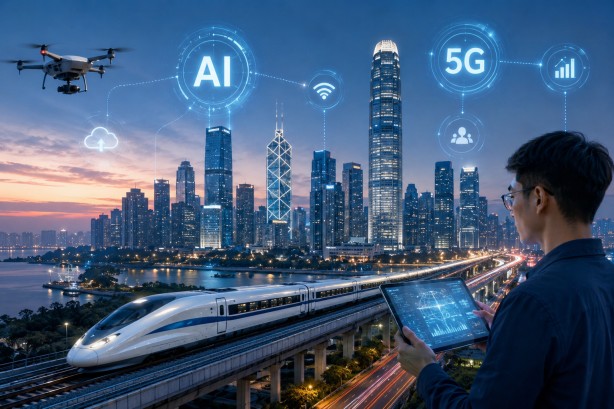
China is making significant strides in enhancing its digital economy by integrating artificial intelligence, digital infrastructure, and smart technologies within various industries and public services. By the year 2025, the digital economy in China grew to an impressive 49 trillion yuan, equivalent to $7.22 trillion, making up about 35% of the country’s GDP. Notably, core digital industries contributed over 10.5% to the GDP, highlighting the sector’s growing importance.
Looking towards the future, China’s 15th Five-Year Plan, covering 2026 to 2030, outlines ambitious goals to further develop its digital landscape. The plan emphasizes expanding AI applications, fortifying data security measures, improving digital governance frameworks, and encouraging international collaboration in technology fields. These initiatives are set to cement China’s position as a global leader in digital innovation.
Across the nation, cities like Beijing are pioneering this digital transformation by implementing cutting-edge technologies in everyday practices. The introduction of internet hospitals, AI-driven traffic systems, shared medical imaging platforms, and smart utility networks exemplifies how advanced digital solutions are enhancing both economic performance and the quality of public services.
These advancements showcase the tangible benefits of digital technology in urban management and healthcare, improving efficiency and accessibility for residents. As China continues to push the boundaries of its digital economy, it sets a precedent for how strategic technological investments can drive substantial national growth.