
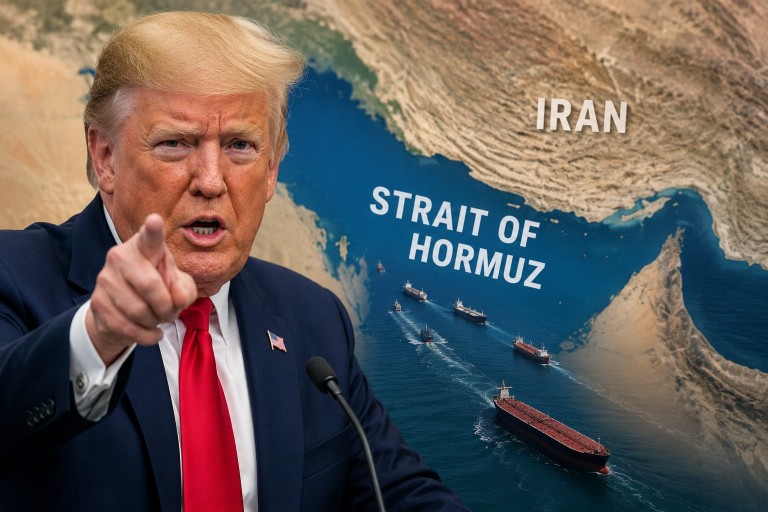
President Donald Trump has issued a bold declaration that the United States might soon consider the Strait of Hormuz as its own territory, amidst ongoing tensions with Iran. Speaking in New York, Trump suggested this move would follow a successful campaign against Iran, claiming that the US already exerts control over the vital waterway via a blockade. This strategic channel is crucial for global oil transportation, with about 20% of the world’s seaborne oil passing through it. The strait, located between Iran and Oman, has been mostly inaccessible since US and Israeli military actions against Iran commenced.
The intent behind Trump’s remarks remains ambiguous, sparking speculation about whether they signify a shift in official US policy or merely serve as a political statement. Iran has swiftly dismissed the US President’s threats, with Deputy Foreign Minister Kazem Gharibabadi asserting that Tehran would not succumb to American pressure. He emphasized that Iran retains authority over decisions related to the opening or closing of the strait.
In parallel, Iranian Foreign Minister Abbas Araqchi stated that Tehran has not engaged in formal talks with Washington, refuting any notion of negotiations. He clarified that messages exchanged via Qatar and Pakistan do not amount to official discussions. Iran has set forth conditions before it will allow normal shipping to resume through the strait, which includes demands for compensation for war-related damages, lifting of sanctions, and the release of frozen Iranian assets.
The impasse over the Strait of Hormuz has led to increased fuel prices, placing additional strain on consumers worldwide. President Trump defended these higher costs, arguing that they are a necessary measure to prevent Iran from acquiring nuclear weapons. The prolonged stalemate has intensified concerns regarding global energy supplies and the broader economic repercussions of the conflict.