
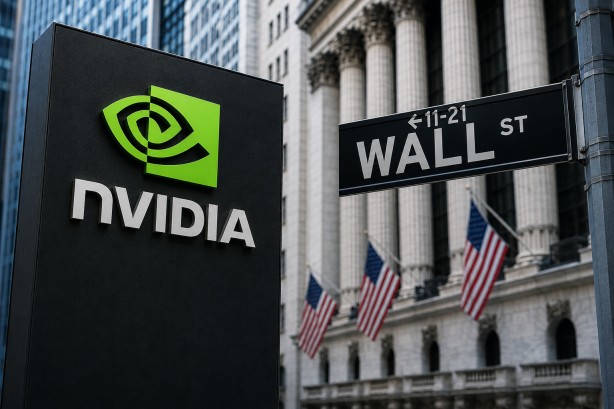
Nvidia has teamed up with six prominent Wall Street financial institutions to secure over $500 billion in funding to build the infrastructure essential for the burgeoning field of artificial intelligence. The collaboration includes big names like Goldman Sachs, Apollo, BlackRock, Blackstone, Brookfield, and KKR. This massive financial backing is intended to fuel the development of data centers, chip manufacturing, and power infrastructure critical for AI computing.
According to Nvidia CEO Jensen Huang, this initiative aims to make large-scale computing infrastructure more attainable for AI companies, businesses, and governments that need a substantial injection of capital to broaden their operations. The move underscores the increasing involvement of institutional investors in funding the worldwide AI infrastructure surge. As the demand for AI services rises, leading tech firms are ramping up their spending on data centers and computing capabilities.
However, the rapid escalation in AI infrastructure investment has sparked concerns about potential financial risks. The heavy reliance on debt to finance these projects could pose problems if companies don’t generate enough profit or if the anticipated growth in AI demand falters. This situation raises questions about the sustainability of leveraging debt for such expansive ventures.
While Nvidia has announced this ambitious financing plan, the company has not yet revealed specific financial details, individual investment contributions, or the timeline for deploying the projected $500 billion. The lack of detailed disclosure leaves some uncertainty about how and when these funds will be utilized to support the anticipated AI infrastructure development.