
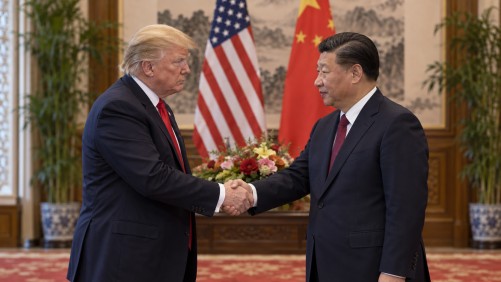
U.S. President Donald Trump and Chinese President Xi Jinping are poised to meet on American soil to tackle ongoing tensions over trade, technology, and Taiwan, amid a backdrop of strained relations between Washington and Beijing. This anticipated meeting marks their second face-to-face engagement this year, yet hopes for substantial breakthroughs on these contentious issues remain low.
Trade discussions are expected to dominate the agenda as a temporary U.S.-China trade agreement nears its expiration in November. This accord, which includes tariff measures and limits on Chinese rare-earth exports, highlights Beijing’s desire for long-term stability in trade relations. Meanwhile, Washington continues to view trade restrictions as a critical tool in negotiations.
Artificial intelligence represents another focal point in the dialogue. U.S. officials have proposed establishing a framework for communication on AI safety and governance, a move China supports. Despite this shared interest, the two nations diverge on the risks and development of AI technologies. The U.S. has placed restrictions on China’s access to advanced semiconductors vital for AI, while China accuses the U.S. of hindering its technological advancement.
The issue of Taiwan remains a sticking point, with the U.S. maintaining strong defense ties to the island, which China claims as its territory. Potential future U.S. arms sales to Taiwan could exacerbate tensions, given China’s opposition to such deals.
Beyond bilateral issues, Trump and Xi are also expected to touch on broader international concerns, including the situations in Iran and Ukraine. China’s significant economic relationship with Iran and its close ties with Russia are likely to be part of these discussions.
This meeting underscores the ongoing strategic rivalry between the U.S. and China, as both countries strive to manage their differences while maintaining channels of communication crucial for global trade, technology, and security.