
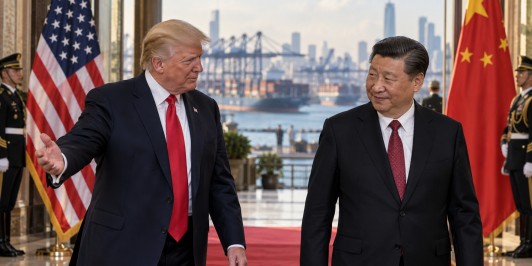
U.S. President Donald Trump extended a high-profile welcome to Chinese President Xi Jinping at Joint Base Andrews, initiating a state visit aimed at addressing trade tensions between the two nations. This ceremony, which included military honors and a flyover by U.S. B-1 bombers, underscored the significance of Xi’s visit to Washington, D.C.
During this visit, the United States and China reached an agreement to extend the Busan agreement until January 10. U.S. Treasury Secretary Scott Bessent announced the extension, which maintains a trade truce that pauses certain measures between the world’s two largest economies. This development is central to ongoing efforts to manage economic and strategic differences.
Trade remains a focal point of Xi’s two-day visit, with discussions also set to cover artificial intelligence and geopolitical tensions. The visit includes a formal welcome at the White House, where Xi will engage in talks with Trump and other U.S. officials. The agenda aims to foster dialogue on economic and strategic issues amid the competitive landscape of advanced technologies.
As the United States and China continue to vie for dominance in sectors like artificial intelligence, both countries are using this state visit as an opportunity to navigate their complex relationship. The meetings are expected to explore ways to maintain open communication channels while addressing the challenges that accompany their rivalry.