
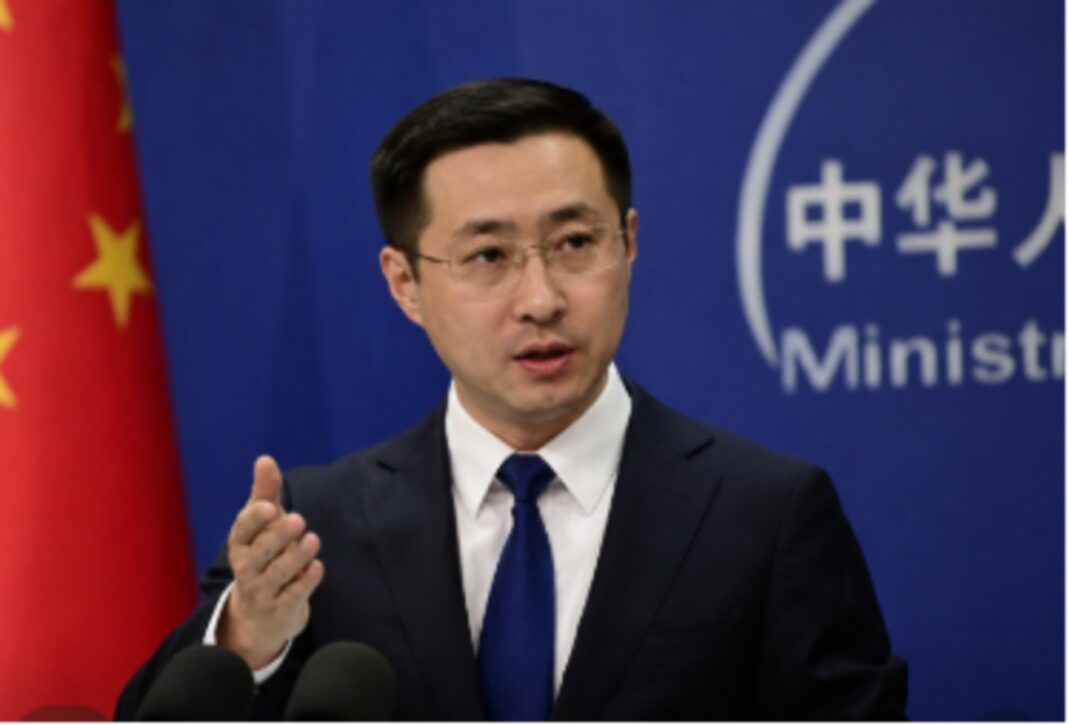
China has voiced its opposition to a proposed U.S. sanctions bill that targets the major purchasers of Russian oil and natural gas, asserting that it will take all necessary steps to safeguard the legitimate rights and interests of its enterprises. The stance was articulated by Foreign Ministry spokesperson Lin Jian, who emphasized China’s firm resistance to unilateral sanctions that lack a foundation in international law or endorsement by the United Nations Security Council.
The legislation under consideration in the United States aims to impose sanctions on the world’s largest importers of Russian crude and natural gas, a group that notably includes China. This move has drawn criticism from Beijing, which views such measures as unjust and potentially damaging to international trade dynamics.
Lin Jian underscored that the application of double standards and coercive tactics would likely backfire, reiterating China’s disapproval of what it perceives as illegitimate unilateral sanctions. The Chinese government maintains that such approaches do not align with international norms and could lead to adverse consequences.
As tensions between Washington and Beijing persist, the proposed sanctions highlight ongoing geopolitical complexities surrounding global energy markets and international trade relations. China’s response signals its determination to protect its economic interests while challenging what it views as overreach by the United States in its foreign policy measures.