
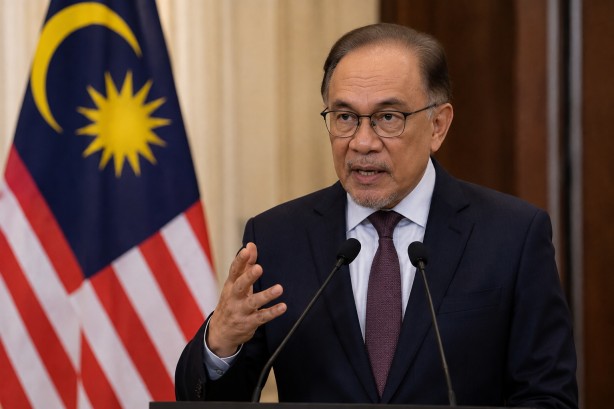
Malaysian Prime Minister Anwar Ibrahim has reaffirmed the country’s adherence to the One China policy by stating that he views Taiwan as part of China. This declaration has garnered approval from Beijing while drawing criticism from Taipei. Anwar underscored Malaysia’s commitment to seeking a peaceful resolution to the ongoing tensions between China and Taiwan.
The One China policy, which Malaysia has upheld since 1974, recognizes the People’s Republic of China as the sole legitimate government of China and acknowledges Beijing’s stance on Taiwan. However, Malaysia also emphasizes the importance of maintaining peace and stability across the Taiwan Strait. Beijing responded positively to Anwar’s remarks, interpreting them as a reflection of its own position on Taiwan. In contrast, Taiwan dismissed the comments, asserting its sovereignty and expressing concerns that such statements might exacerbate military tensions.
Although Malaysia and Taiwan do not share formal diplomatic ties, they maintain robust economic, cultural, and technological connections through their respective representative offices. Anwar’s recent comments could potentially strain Malaysia’s relationship with Taiwan, especially among Taiwanese businesses and investors wary of geopolitical risks. Nonetheless, Malaysia is expected to continue its strategic balancing act, nurturing its strong ties with China while sustaining its substantial economic engagement with Taiwan.
In 2025, trade between Malaysia and Taiwan reached an impressive US$54.49 billion, underscoring Taiwan’s significance as one of Malaysia’s key trading partners. Despite the diplomatic discord, the economic interests of both sides are likely to foster ongoing cooperation.